
What Can I Eat After Tooth Extraction? 7 Tips from Epsom Dental Care
Tooth extraction is one of the more straightforward dental procedures, but the recovery period requires a little more attention — particularly when it comes to what you eat. The foods you choose in the days following your extraction can directly affect how quickly and smoothly you heal.
Eating the wrong things too soon can dislodge the blood clot forming in the socket, introduce bacteria, or cause unnecessary irritation to the healing tissue. The right foods support recovery, reduce discomfort, and help keep your energy up while your mouth heals.
Here’s what your Belmont WA dentist recommends eating after a tooth extraction — and what to steer clear of.
How Long Does the Recovery Period Last?
Most patients feel significantly better within three to five days of a straightforward extraction. However, full healing of the gum tissue can take two to four weeks, and the underlying bone takes longer still.
The first 24 to 72 hours are the most critical. During this period, a blood clot forms in the empty socket — this clot is essential for protecting the exposed bone and nerve tissue underneath and must not be disturbed.
Premature loss of the blood clot may result in alveolar osteitis (dry socket), a painful postoperative complication associated with delayed healing and the need for additional management.
Your diet plays a direct role in protecting that clot and keeping the area free from irritation during this window.
Foods to Eat After a Tooth Extraction
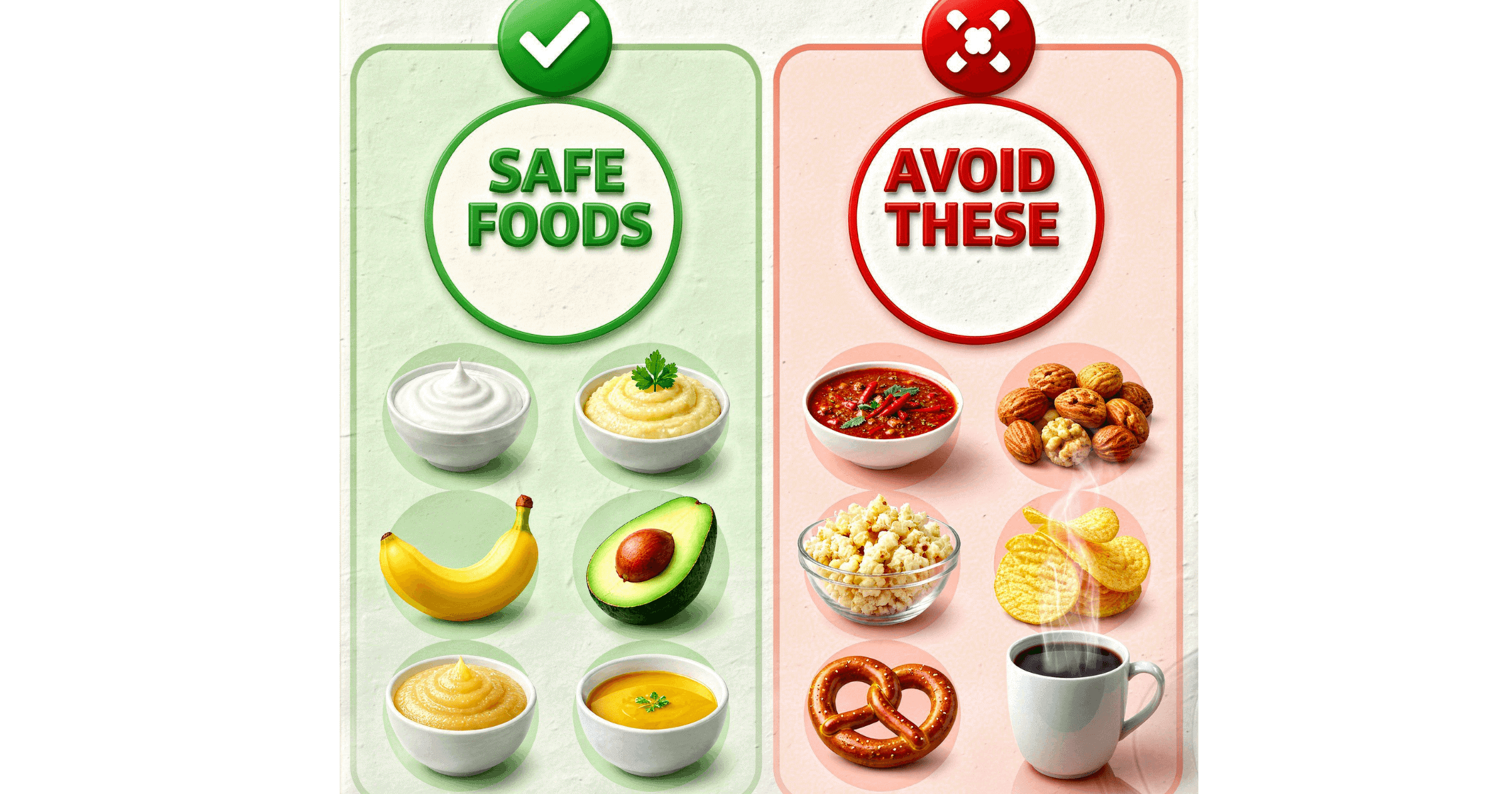
Stick to soft, easy-to-chew foods that require minimal jaw movement and won’t disturb the extraction site. Keep everything lukewarm or cool — hot food and drink can dissolve the clot and should be avoided for at least the first 24 hours.
1. Soup
Pureed or broth-based soups are ideal in the first few days after extraction. They’re easy to consume, hydrating, and can be packed with nutrients.
Opt for smooth vegetable soups, chicken broth, or blended lentil soups. Avoid chunky varieties with large pieces of meat or vegetables that require chewing, and always let soup cool before eating.
2. Yoghurt
Plain yoghurt is soft, cool, and easy to eat even when your mouth is sore. It’s also a good source of protein and calcium, both of which support tissue healing.
Choose yoghurt without added fruit pieces, granola, or crunchy toppings. Greek yoghurt is a particularly good option due to its higher protein content.
3. Applesauce
Fresh apples are off the menu for a while, but applesauce offers a similar flavour without the texture issues. It’s soft, gentle on the gums, and easy to eat at any time of day. Look for unsweetened varieties to avoid excess sugar around the healing site.
4. Eggs
Scrambled or poached eggs are easy to eat, high in protein, and quick to prepare. Protein is particularly important during recovery as it supports tissue repair.
Avoid hard-boiled eggs — their texture requires more chewing and may make the area around the extraction site feel sore or uncomfortable.
5. Oatmeal
Once you’re a few days into recovery and the initial soreness is settling, oatmeal is a filling and nutritious option. It provides fibre and slow-release energy and can be flavoured without adding anything crunchy or chewy. Make sure it’s cooled to lukewarm before eating.
6. Mashed Potatoes
Mashed potatoes are a nutritious and satisfying soft-food option during recovery after dental surgery. They’re filling, easy to prepare, and can be made more nutritious by adding butter, cream, or soft-cooked blended vegetables.
Avoid versions with chunky skins or toppings, such as crispy bacon bits, that could irritate the extraction site.
7. Cottage Cheese
Cottage cheese is soft, high in protein, and works well as a snack or as an addition to other meals. It requires virtually no chewing, making it one of the easier options in the first couple of days. It pairs well with soft fruits like bananas if you’re looking to add variety to your diet during recovery.
Other Soft Foods Worth Including
Beyond the seven options above, the following are also well-suited to post-extraction recovery:
- Mashed or pureed avocado
- Smoothies (drunk from a glass, not a straw)
- Soft-cooked fish like salmon or barramundi
- Silken tofu
- Hummus
- Soft-cooked pasta or well-cooked rice
- Banana
- Soft-steamed vegetables, mashed or blended
What to Avoid After a Tooth Extraction
- Hard and crunchy foods — Chips, crackers, raw vegetables, nuts, and hard bread crusts can break into small pieces that become lodged in the socket and require chewing force that disturbs the extraction site.
- Chewy foods — Chewy meats, lollies, gummy snacks, and tough bread require prolonged jaw movement that can dislodge the clot or cause pain around healing tissue.
- Hot food and drink — Heat increases blood flow to the area and can dissolve the blood clot. Avoid hot coffee, tea, soups, and meals for at least the first 24 hours.
- Alcohol — Alcohol interferes with healing and can interact with any pain relief prescribed after your procedure. Avoid it for at least 24 hours, and ideally for several days.
- Spicy foods — Spices can irritate exposed tissue and cause significant discomfort in a healing socket. Keep meals mild until the area has closed over.
- Straws — Straw use can create suction that may dislodge the blood clot from the socket. Avoid straws for at least 72 hours, and longer if advised.
- Smoking — Smoking impairs blood circulation, delays healing, and substantially increases the risk of dry socket and infection. Avoid smoking for as long as possible after extraction.
General Aftercare Tips
- Avoid rinsing your mouth forcefully for the first 24 hours. After that, gentle saltwater rinses help keep the area clean.
- Take any prescribed pain relief or antibiotics as directed.
- Sleep with your head slightly elevated for the first night or two to reduce swelling.
- Chew on the opposite side of your mouth until the extraction site has closed.
- Attend any scheduled follow-up appointments to confirm the site is healing as expected.
Frequently Asked Questions
When can I start eating normally after a tooth extraction?
Most patients can reintroduce firmer foods gradually from around day seven, depending on how the site is healing. Start with soft foods and increase texture as comfort allows. Your Belmont WA dentist will advise at your follow-up if the site needs more time.
Can I drink coffee after a tooth extraction?
Not immediately. Hot beverages should be avoided for at least the first 24 hours. Once the initial healing period has passed, small sips of lukewarm coffee are generally fine — but avoid using a straw.
What is dry socket, and how does it happen?
Dry socket, or alveolar osteitis, results from premature loss of the extraction-site blood clot, exposing underlying bone and neural structures and causing significant postoperative pain. It can be triggered by straws, smoking, hard or chewy foods, or forceful rinsing in the first 24 hours.
Can I consume ice cream following a dental extraction?
Yes — soft, plain ice cream is generally fine, and the cool temperature can help reduce discomfort. Avoid flavours with hard mix-ins like nuts or biscuit pieces, and eat it from a bowl rather than a cone.
How do I get enough nutrition while on a soft food diet?
Focus on protein-rich options like eggs, yoghurt, cottage cheese, and soft fish. Add healthy fats through avocado or smooth nut butters. Smoothies are also a practical way to include fruit and vegetables — drink them from a glass.
Tooth Extraction in Belmont WA
Recovery from a tooth extraction doesn’t have to be difficult. With the right food choices and a little care in the first few days, most patients are back to their normal diet within one to two weeks.
At Epsom Dental Care, we provide clear aftercare guidance for every patient following an extraction, so you know exactly what to expect and how to look after yourself at home.
Call us on (08) 9478 2349 or book your appointment online.
We are located at 5/132 Epsom Ave in Belmont WA.