

Broken Tooth: What to Do First and How It Can Be Repaired

A broken tooth can be alarming, and it’s worth having it looked at, even if it doesn’t hurt much. This guide covers the first steps to take, the different kinds of breaks, and how a broken tooth can be repaired.
It’s general information, not a diagnosis. Only an examination can show how deep a break goes. If swelling affects your breathing or swallowing, call 000.
First Steps for a Broken Tooth
These steps manage things until you’re seen. They don’t repair the tooth.
- Rinse gently with lukewarm water.
- Press gently with clean gauze or a cloth if there’s bleeding.
- Keep any fragment moist in milk or saline, and bring it with you. Don’t try to glue it back.
- Use a cold compress on the outside of your cheek if there’s swelling.
- Cover a sharp or rough edge with dental wax from a pharmacy to protect the area until you’re seen.
- Avoid chewing on that side, and steer clear of very hot or cold food and drink.
- If you’re uncomfortable, use over-the-counter pain relief as directed on the packaging. Don’t place anything directly on the tooth or gum.
Then call the practice, describe what happened, and ask about the earliest available appointment.
What Kind of Break Is It?
Not every broken tooth is the same, and the type affects what’s needed. A dentist may find one of these:
- A small chip in the outer enamel
- A crack, from fine hairline cracks to a vertical crack running from the biting surface towards the gumline
- A fractured cusp, where a crack forms around a filling and a piece of the tooth comes away
- A split tooth, where a crack divides the tooth in two and may run below the gumline
- A crack that starts below the gumline (a vertical root fracture), which may not cause symptoms until infection develops
- A break that reaches the nerve, where bacteria can get into the inner tooth
Tooth Broken at the Gumline: What If the Root Is Still in the Gums?
Sometimes the visible part of a tooth breaks off, and the root stays in the gum. The key points are:
- Don’t try to remove or dig out the root yourself. It can cause bleeding and injury.
- A break that reaches the inner part of the tooth can let bacteria in and lead to an abscess, and some breaks below the gumline don’t cause symptoms until infection develops.
- It needs an X-ray. The dentist checks how much healthy tooth is left and the condition of the root.
Depending on what they find, the options may include root canal treatment and a crown if enough tooth remains, or removing the remaining root and discussing replacement options. Whether a tooth can be saved depends on the case, and it can’t be promised in advance.
Broken Tooth Repair Options
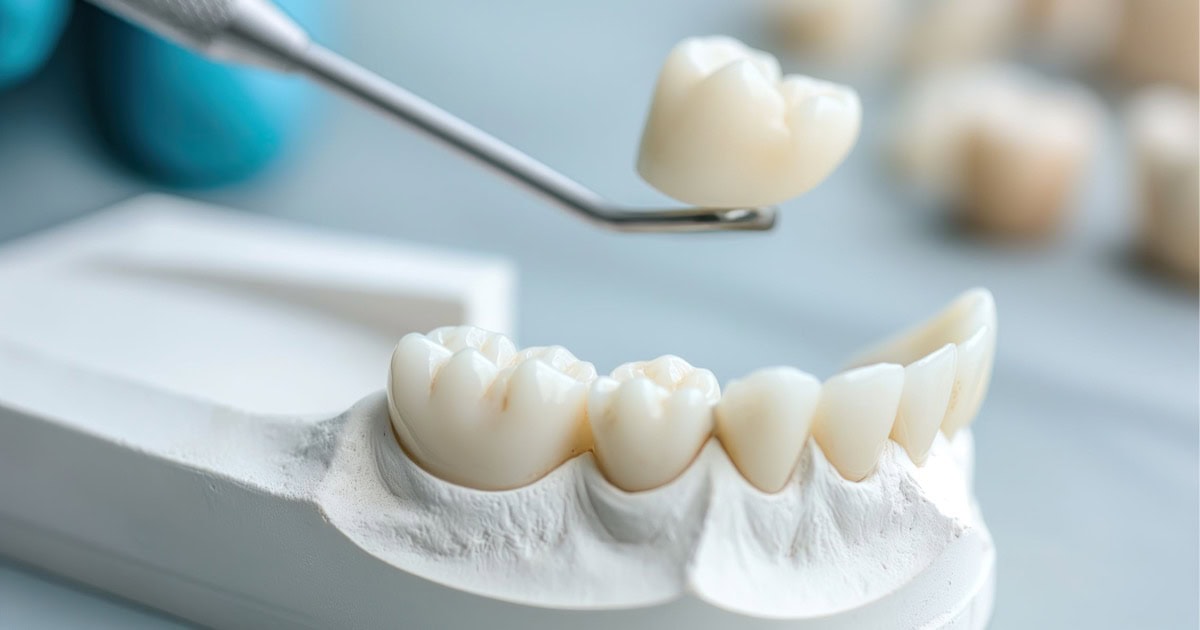
Broken tooth repair depends on the size and depth of the break, where the tooth sits and how your teeth bite together. Options your dentist may discuss include:
- Smoothing. For a small chip, your dentist may smooth rough edges and polish the tooth.
- A tooth-coloured filling or bonding to rebuild a small to moderate break. See our tooth fillings page. These can wear or chip and may need replacing over time.
- An inlay or onlay for a larger break in a back tooth, where a filling isn’t enough. See inlays and onlays.
- A veneer for a front tooth. It usually involves removing some enamel, which can’t be undone. See dental veneers.
- A crown for a large break or a weakened tooth (see below).
- Root canal treatment if the break reaches the nerve. See root canal treatment.
- Removal and replacement if the tooth can’t be restored. See tooth extraction and dental implants.
Dental Crown for a Broken Tooth
A dental crown for a broken tooth covers the whole visible tooth, which can protect and rebuild a tooth that’s too damaged for a filling. Your dentist will examine the tooth, shape it, take an impression or scan, and fit the crown.
Shaping removes some tooth structure, which can’t be undone. A crown can also chip, loosen or need replacing over time, and some teeth need root canal treatment first. See our crowns and bridges page.
Results vary between patients, and no repair can be guaranteed. Your dentist will explain the benefits, risks and limitations before anything goes ahead.
When a Broken Tooth Is an Emergency
Call the practice promptly if you have:
- Severe or worsening pain
- Bleeding that doesn’t stop
- Swelling in your face, cheek or jaw
- A fever
- A tooth that’s loose or has moved
- A bump on your gum or a bad taste, which can point to infection (see dental abscess)
If the break followed a significant knock to the head or face, seek medical care. If swelling affects breathing or swallowing, or spreads toward your eye or neck, call 000 or go to an emergency department. Outside opening hours, seek an available emergency dental service if it can’t wait.
Our dental emergency page and our guide to dental emergencies in Belmont explain more, and you can read about broken tooth treatment.
Reducing the Risk of a Broken Tooth
Nothing can prevent every break, but these help:
- Avoid chewing ice, hard lollies and pens.
- Wear a mouthguard for contact sports. See mouthguards and splints.
- Have decay and worn or cracked fillings checked.
- Tell your dentist if you grind or clench your teeth.
- Keep up regular check-ups.
Frequently Asked Questions
Can a broken tooth be saved?
Often something can be done, but it depends on the break. A dentist needs to examine the tooth and take an X-ray to say what’s possible, and no outcome can be guaranteed.
Should I glue a broken piece back on?
No. Keep the fragment in milk or saline and bring it to your dentist. Glue can damage the tooth and be harder to repair.
Is a broken tooth always an emergency?
Not always. A small chip with no other symptoms can usually be booked in promptly. Severe pain, swelling, fever, bleeding that won’t stop, or a loose tooth needs urgent care.
What if the broken tooth doesn’t hurt?
It still needs checking. Cracked teeth don’t always cause symptoms, but a break can let bacteria into the inner tooth and lead to infection.
Can a broken tooth heal on its own?
No. A cracked or broken tooth can’t heal by itself, but treatment might save it. The tooth needs to be assessed.
Will I need a crown for a broken tooth?
Not necessarily. Small breaks may only need smoothing or a filling, while larger breaks may need a crown. Your dentist will advise after an examination.
Book an Emergency Appointment in Belmont
If you’ve broken a tooth, call us on (08) 9478 2349 during opening hours, describe what happened and ask about the earliest available appointment. An online request is pending until the practice confirms it, so please call if it’s urgent.
At Epsom Dental Care, we see patients from Belmont, Redcliffe, Ascot, Kewdale, and Rivervale. You’ll find us at 5/132 Epsom Ave, Belmont WA 6104.
Sources: Cleveland Clinic. “Cracked Tooth (Fractured Tooth).” my.clevelandclinic.org (medically reviewed, last updated 29 April 2024). Cleveland Clinic. “Chipped Tooth.” my.clevelandclinic.org (medically reviewed, last updated 30 April 2024).
Any surgical or invasive procedure carries risks. Before proceeding, consider seeking a second opinion from an appropriately qualified health practitioner.