

Children’s Dental Health: Age-by-Age Guide for Parents

Most parents know they should look after their children’s teeth — but when should it actually start? What’s normal at age 4 versus age 10? And when does a dentist visit go from optional to essential?
This guide breaks it down by age group, so you know exactly what to expect, what to do, and when to act. Whether your child is cutting their first tooth or heading into high school, there’s something here that applies right now.
Ages 0–2: First Teeth and First Habits
Teeth can start appearing as early as 4–6 months, though the full teething timeline varies from one child to the next. The lower central incisors usually come first, followed by the upper front teeth, and the rest follow gradually through the first two years.
Cleaning from day one
You don’t need teeth to start oral hygiene. After feedings, use a fresh, moist towel to clean your baby’s gums before their first tooth erupts.
When the first tooth erupts, begin using a gentle baby toothbrush and a small amount of low-fluoride toothpaste—about a grain of rice.
First dental visit by age 1
The Australian Dental Association (ADA) recommends that children have their first dental visit by the time they turn one, or within six months of their first tooth appearing. This isn’t about treatment — it’s about helping your child feel comfortable in the environment early and giving the dentist a chance to spot any concerns before they become problems.
Bottle and breastfeeding decay risk
Prolonged bottle feeding, especially at night, is one of the main causes of early childhood caries. When milk or formula pools around the teeth during sleep, it creates the right conditions for decay to set in quickly.
If your child falls asleep while feeding, gently wipe the teeth and gums afterwards, and avoid putting juice or other sweetened drinks in the bottle.
Ages 3–5: Building Independence
By age three, most children have their full set of 20 baby teeth. These teeth matter more than many parents realise — they hold the space for permanent teeth, support speech development, and help children chew properly. Losing baby teeth too early because of decay can lead to alignment problems later.
Supervised brushing
At this age, children don’t yet have the fine motor skills to brush properly on their own. Let them have a go, but always finish the job for them. Twice-daily brushing — in the morning and before bed — with a small amount of children’s fluoride toothpaste is the standard.
Routine check-ups
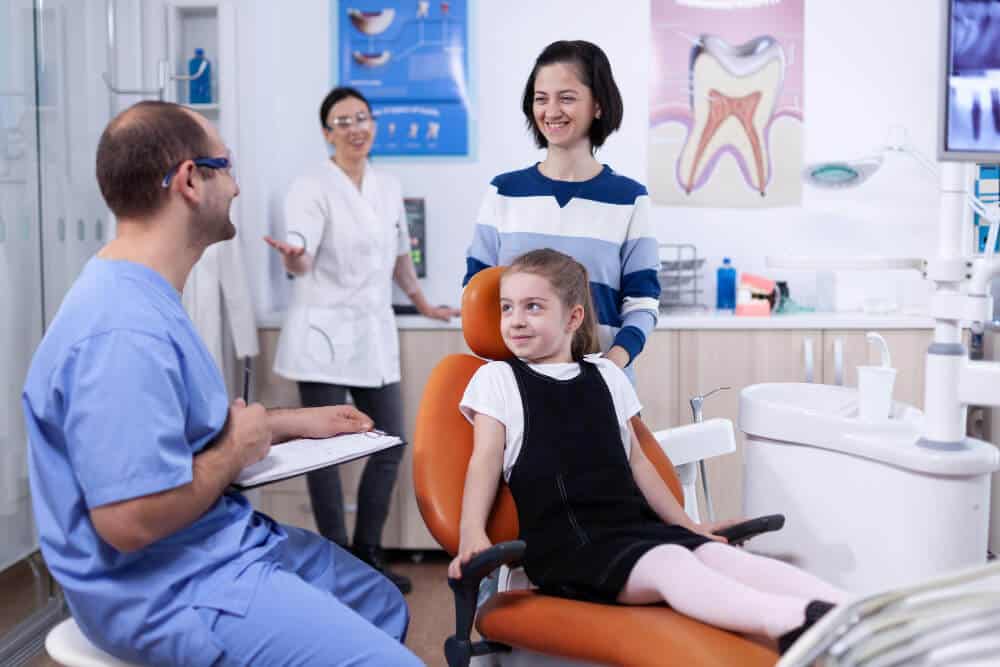
Six-monthly dental visits should be established by now. Regular dental check-ups at this age aren’t just about catching problems — they also build familiarity with the dental chair, which pays off significantly in the years ahead.
Sugary snacks and drinks
Frequency matters more than quantity. A child who sips juice throughout the day has far more exposure to sugar than one who drinks it once with a meal. Limiting snacks to set times and rinsing with water afterwards makes a real difference to cavity risk.
Thumb sucking
Most children stop on their own by age 3–4. If the habit continues past age 5, it’s worth mentioning to your dentist, as persistent thumb or finger sucking can affect how the teeth and jaw develop.
Ages 6–12: Mixed Dentition
This is one of the busiest stages in dental development. From around age six, children begin to lose their baby teeth as permanent teeth start to erupt, often in an irregular sequence.
The first permanent molars (the “six-year molars”) arrive at the back of the mouth without replacing anything, so they can sometimes be missed.
First permanent molars and sealants
These molars have deep grooves that are difficult to clean and highly prone to decay. Dental sealants are administered as a thin layer of protection on the chewing surface, significantly reducing the risk of cavities in these teeth.
Ask your dentist whether sealants are appropriate for your child.
Losing baby teeth
Baby teeth typically loosen on their own and fall out naturally. If a tooth is knocked out or needs to come out early due to decay, your dentist might suggest a space maintainer to prevent shifting.
Building a flossing habit
Once teeth start touching each other, flossing becomes necessary — a toothbrush can’t reach those contact points. Age 6–7 is a reasonable time to introduce flossing with parental help, and by 10–12, most children can manage it independently.
Mouthguards for sport
If your child plays contact or collision sports — football, rugby, basketball, or martial arts — a custom-fitted mouthguard is worth the investment. Over-the-counter options offer some protection, but a dentist-made mouthguard provides more reliable coverage and a better fit.
Orthodontic assessment
The Australian Society of Orthodontists recommends that children have an orthodontic assessment around age 7–8. This doesn’t mean braces at age 8 — it means identifying any developing issues early, when there’s still room to guide jaw and tooth development in a more predictable direction.
Ages 13 and Over: Teen Dental Health
By the early teens, most permanent teeth are in place — the exception being wisdom teeth, which typically emerge between ages 17 and 25. From here, the focus shifts to maintenance, awareness, and the management of the specific pressures that come with adolescence.
Wisdom teeth monitoring
Not all wisdom teeth require removal, but monitoring their development is important, as impacted or partially erupted teeth can lead to pain, crowding, or infection.
Regular X-rays from the mid-teens onwards allow your dentist to track their position and plan accordingly.
Oral hygiene with braces
Braces create additional surfaces where plaque can build up, and the risk of white spot lesions (permanent marks on the enamel) is real if hygiene slips. Interdental brushes, floss threaders, and consistent brushing technique all become more important during orthodontic treatment.
Diet and lifestyle
Teenagers tend to consume more soft drinks, sports drinks, and energy drinks, which are acidic and can wear down tooth enamel. Even sugar-free versions can cause enamel wear over time.
Encouraging water as the main drink and limiting acidic beverages to mealtimes is practical, realistic advice that adds up.
Sport protection
Teen athletes should wear a properly fitted mouthguard, ideally a custom-made one. This is especially true once permanent teeth are fully developed and any dental injury becomes a longer-term concern.
Common Childhood Dental Issues
Early childhood caries (ECC)
One of the most common chronic childhood conditions in Australia, ECC refers to tooth decay in children under 6 years old. It progresses more rapidly in baby teeth and can require significant treatment if left untreated.
The main preventable causes are frequent exposure to sugar and nighttime bottle feeding.
Thumb and finger sucking effects
Past age 5, this habit can push the front teeth forward, create an open bite (where upper and lower front teeth don’t meet), and narrow the upper jaw. It’s a habit rather than a structural problem, and most respond well to a supportive approach.
Dental injuries
Falls and knocks are part of childhood, and teeth often take the impact. Never attempt to reimplant a baby tooth that has been knocked out— see a dentist to check for injury to the underlying permanent tooth.
If a permanent tooth is knocked out, maintain it moist (in milk or saline solution, or by holding it in the cheek) and get to a dentist immediately. Time matters.
Dental anxiety in children
Dental anxiety in children is common and manageable. It’s often shaped by their early experiences, which is exactly why early and frequent positive visits matter.
If your child is particularly anxious, let the dental team know — there are practical strategies that make a real difference.
Frequently Asked Questions
When should kids start brushing alone?
Most children are ready to brush independently around age 7–8, but parental supervision or spot-checking is recommended until at least age 10. Dexterity, not age, is the real indicator.
Do baby teeth really matter if they fall out anyway?
Yes. Baby teeth guide permanent teeth into position, support speech and chewing, and affect jaw development. Early loss from decay can lead to crowding and misalignment of permanent teeth.
When do kids need dental X-rays?
This depends on the child’s individual risk level. Children with tight contacts between teeth or a history of cavities may need X-rays from age 3–4. Your Belmont WA dentist will advise based on their specific situation.
How do I make brushing fun for young kids?
Brushing apps with timers, letting children pick their own toothbrush, brushing together as a family, and reward charts all work well. The goal is building the habit — the technique improves over time.
Does Medicare cover children’s dental?
The (CDBS) Child Dental Benefits Schedule provides eligible children aged 0–17 with a benefit cap for basic dental services over two years. Eligibility is linked to specific government payments — check with Medicare or ask our front desk about your child’s status.
Children’s Dentistry in Belmont WA
At Epsom Dental Care, we see patients from across Belmont WA and the surrounding suburbs of Rivervale, Cloverdale, Redcliffe, and Ascot. We understand that building a positive relationship with the dentist early makes a lasting difference — not just for your child’s oral health now, but for the confidence and habits they carry into adulthood.
Whether it’s your child’s first visit, a routine check-up, or something that needs attention, our team is here to make the experience as comfortable as possible. We take the time to explain what we’re doing, involve your child in the process, and work with parents to build practical home care routines that actually stick.
If you have questions about your child’s dental development or you’re ready to book an appointment, we’d love to hear from you.
Call us on (08) 9478 2349 or book online. You’ll find us at 5/132 Epsom Ave, Belmont WA.
This blog is intended as general educational information. For advice specific to your child, please consult your dentist.