

Root Canal Cost: What Affects the Price and Your Options

If you’ve been told you need a root canal, the first question most patients ask isn’t about the procedure — it’s about the cost. That’s fair. Root canal treatment is one of the more involved dental procedures, and the price isn’t fixed. It depends on several clinical factors that vary from patient to patient.
This guide explains what drives the cost, why a crown is usually part of the picture, and how to approach the financial side before treatment starts.
What Affects the Cost of a Root Canal?
Which tooth needs treatment
The location of the affected tooth is one of the biggest cost factors. Front teeth typically have one root canal. Premolars may have one or two.
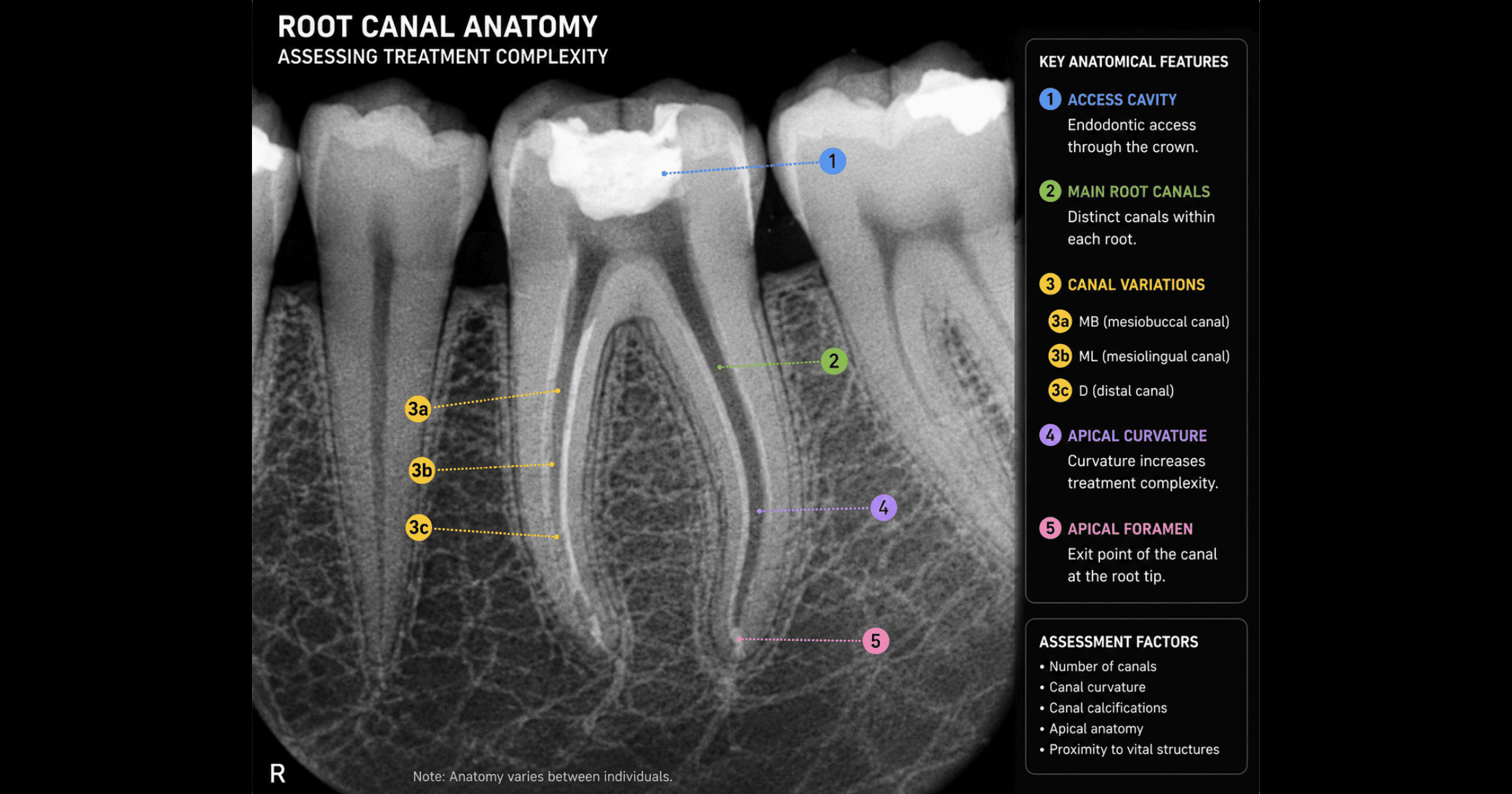
Molars often have three or four. More canals mean more clinical time and greater technical complexity — both of which affect the overall fee.
Complexity of the case
Some cases are straightforward. Others involve curved, calcified, or unusually narrow canals that require additional skill and time. A history of previous dental work, significant infection, or atypical root anatomy can all increase complexity.
Number of visits required
Depending on the extent of infection and the condition of the tooth, treatment may be completed in one appointment or over two appointments. Multi-visit cases involve additional chair time, which is reflected in the cost.
Crown placement afterwards
Most teeth that undergo root canal treatment will need a crown. This is a separate cost from the root canal itself and should be factored into your planning from the start — not treated as an add-on after the fact.
Health fund rebates
You may be eligible for a rebate for root canal treatment and crowns if you have private health insurance extras cover. The amount depends on your fund and level of cover.
Checking your policy before your appointment is a practical first step.
Front Tooth vs Molar — Why the Tooth Type Matters
Front teeth generally have a single, straighter root. The procedure still requires care, but it’s typically less involved than treating a back tooth.
Molars have multiple roots and canals, all of which need to be cleaned, shaped, and sealed individually. The anatomy is more complex, access is more demanding, and treatment takes longer.
This is why molar root canals consistently involve more clinical time — and why they sit at the higher end of the cost range.
Premolars sit between the molars and the canines, with one or two roots depending on the tooth and the patient. Your dentist will assess the specific anatomy through examination and X-rays before providing a fee estimate.
Root Canal vs Extraction and Replacement
Extraction removes the immediate problem but creates a new one. Losing a tooth—especially one that plays a key functional role—can lead to shifting teeth, changes in bite, and possible jawbone loss.
Restoring the space with a dental implant, bridge, or partial denture also requires further cost and treatment time. When you factor in replacement, the total investment often exceeds the cost of saving the natural tooth in the first place.
Root canal treatment followed by a crown keeps the natural tooth in place, maintains bite function, and avoids the downstream complications that can follow extraction. For most patients, it’s the more cost-effective path over time.
Why a Crown Usually Follows Root Canal Treatment
Once the pulp has been taken out, the tooth tends to become weaker and more brittle. Without the living tissue inside, it’s more vulnerable to fracture under normal biting pressure — particularly for back teeth.
A crown restores the tooth’s strength and allows it to function without the risk of cracking. For most treated teeth, especially molars and premolars, a crown is the standard recommendation.
For some front teeth with minimal structural damage, a simpler restoration may be sufficient — your dentist will assess what’s appropriate based on what remains of the tooth structure.
Budgeting for the crown alongside the root canal from the outset gives you an accurate picture of the total cost before treatment begins.
Health Funds and Payment Options
Root canal treatment typically falls under major dental in extras cover. The rebate you receive depends on your fund, your level of cover, and any annual limits or waiting periods that apply.
Contacting your fund before your appointment — or checking rebate estimates through their app or member portal — helps you plan.
If upfront costs are a concern, ask about payment plan options before treatment starts. Many practices offer arrangements that spread costs over time.
One important note: delaying treatment while weighing up costs rarely works in your favour. An untreated infection doesn’t resolve on its own. Leaving it longer typically means more complex treatment, not less.
Frequently Asked Questions About Root Canal Cost
How much does a root canal cost in Australia?
Costs vary based on which tooth is being treated, the number of canals, the complexity of the case, and whether a crown is required. Your dentist will provide a treatment plan and itemised fee estimate after examining the tooth and reviewing X-rays.
Will private health insurance help cover the cost of root canal treatment?
It may. Root canal treatment typically falls under major dental in extras cover. The rebate depends on your fund, your cover level, and any annual limits. It’s best to contact your health fund prior to your appointment to get an estimate of your benefits.
Is a crown always necessary after root canal treatment?
In most cases, yes — particularly for back teeth that bear significant biting force. A crown protects the treated tooth from fracture and restores full function. Your Belmont WA dentist will advise based on the remaining tooth structure and which tooth was treated.
How long does root canal treatment take?
A straightforward single-canal case may be completed in one appointment. More complex cases — particularly on molars or teeth with significant infection — may require two visits. Your Belmont WA dentist will give you a realistic timeframe based on your specific situation.
Is the cost of a crown included in the root canal fee?
No. The crown is a separate restoration and is quoted separately. Both should be discussed and itemised in your treatment plan before you commit to proceeding.
Root Canal Treatment in Belmont WA
If you’ve been advised that you need root canal treatment — or you’re experiencing tooth pain and want to understand your options — we’re here to help. At Epsom Dental Care, we walk you through your treatment plan, explain the associated costs, and discuss payment options before anything begins.
We see patients from Belmont WA and the surrounding areas including Rivervale, Cloverdale, Redcliffe, and Ascot.
Call us on (08) 9478 2349 or book your appointment online. You’ll find us at 5/132 Epsom Avenue, Belmont WA.