

Why Are My Teeth Sensitive? Causes and What to Do

Tooth sensitivity is one of those things that’s easy to push aside — a brief sharp pain when you drink something cold, eat something sweet, or breathe in cool air. It happens, it passes, and most people assume it’s just part of having teeth. But sensitivity is a symptom, not a condition in itself, and what’s behind it matters.
This article covers the most common causes, what you can do at home, and when it’s worth getting it properly assessed.
What Is Tooth Sensitivity?
Tooth sensitivity — clinically referred to as dentine hypersensitivity — is a sharp, short-lived pain triggered by external stimuli. Cold temperatures are the most common trigger, but sensitivity can also be provoked by heat, sweet foods, acidic foods and drinks, cold air, and sometimes touch.
The pain originates from the dentine, the layer beneath the enamel. Dentine is filled with thousands of tiny channels that connect to the nerve in the centre of the tooth.
When dentine is exposed — either because the enamel has worn away or the gum has receded, revealing the root surface — these tubules are no longer protected. Stimuli reach the nerve more easily, producing the characteristic sharp response.
What Causes Sensitive Teeth?
Several distinct conditions lead to dentine exposure or nerve irritation. Identifying which applies is the first step toward addressing it effectively.
Enamel erosion
Enamel is the hardest substance in the body, but it wears down permanently when exposed to acid repeatedly over time. Dietary acids — from citrus fruits, soft drinks, sports drinks, fruit juices, and vinegar-based foods — soften the enamel surface.
Stomach acid from reflux or frequent vomiting causes the same damage, often more severely because it affects the inner surfaces of the teeth.
Once enamel is lost, it doesn’t grow back. The dentine beneath becomes progressively more exposed and sensitivity increases.
Gum recession
The root surface of a tooth has no enamel covering it — only cementum, a much thinner and less protective layer. When gums recede, the root is exposed, and sensitivity follows. Gums can recede because of gum disease, brushing too hard, or simply having naturally thin gum tissue that’s more prone to pulling back.
Teeth grinding and clenching.
Bruxism places sustained pressure on the teeth, gradually wearing down the enamel, particularly on the biting surfaces. People who grind at night are often unaware of it — worn-down teeth, morning jaw soreness, or a partner noticing the sound are frequently what bring it to attention.
Sensitivity that’s diffuse across multiple teeth rather than localised to one area is often bruxism-related.
Aggressive brushing
Brushing with a hard-bristled toothbrush or with excessive pressure wears away enamel at the gumline and contributes to gum recession over time. The damage is gradual but cumulative, and it’s one of the more common causes of sensitivity that patients don’t initially associate with their brushing habits.
Cracked teeth
A crack in a tooth — from biting something hard, an old filling that has put stress on the surrounding structure, or trauma — can expose the dentine or allow stimuli to reach the nerve directly. Sensitivity from a crack is often sharp and localised to a specific tooth, and may be triggered by biting pressure as well as temperature.
Tooth decay
Cavities create pathways through the enamel directly toward the nerve. As decay progresses, sensitivity typically increases. A tooth that was mildly sensitive and then becomes significantly more so — or starts responding to heat as well as cold — may have decay that has progressed close to the pulp.
Recent dental treatment
Sensitivity following fillings, crowns, scaling, or whitening treatment is common and usually temporary. The nerve has been disturbed, or the dentine has been briefly exposed, and the tooth needs time to settle. If sensitivity from a recent procedure persists beyond a few weeks or worsens, it should be reviewed.
Gum disease
Gum disease gradually destroys the bone and tissues that hold your teeth in place, causing the gums to recede and exposing the tooth roots. Sensitivity, along with bleeding gums, bad breath, or loose teeth, suggests gum disease as a likely contributing factor.
Identifying the Pattern
Where sensitivity occurs and what triggers it can narrow down the cause:
- All teeth, diffuse sensitivity — often due to enamel erosion from diet or reflux, or bruxism.
- Sensitivity at the gumline on multiple teeth — frequently aggressive brushing or gum recession
- One specific tooth — more likely a crack, cavity, or failing restoration
- Sensitivity that continues for more than 30 seconds after the trigger is removed — suggests nerve involvement beyond simple dentine hypersensitivity.
What You Can Do at Home
Home care can reduce sensitivity and slow its progression, but only if the cause is addressed alongside it.
Desensitising toothpaste
Desensitising toothpastes with potassium nitrate or stannous fluoride are among the most effective options for relieving tooth sensitivity. Potassium nitrate works by calming the nerve; stannous fluoride occludes the dentinal tubules, blocking the pathway to the nerve.
These toothpastes work best when used every day, with results building over several weeks. For quicker relief, you can also rub a small amount directly onto sensitive teeth with a clean finger after brushing.
Soft-bristled toothbrush and correct technique
Switch to a soft-bristled toothbrush if you’re not already using one, and focus on gentle circular motions rather than scrubbing. This prevents further enamel loss and gum recession at the gumline. Electric toothbrushes with pressure sensors are particularly useful for patients who habitually brush too hard.
Dietary adjustments
Reduce how often you consume acidic foods and drinks, as the frequency of acid exposure is just as important as the amount. After consuming acidic items, rinse your mouth with water instead of brushing immediately, as the enamel is temporarily softened and more susceptible to wear.
Avoid teeth grinding triggers.
If bruxism is suspected, reducing caffeine and alcohol — both of which increase grinding activity — can help in the short term. A nightguard fitted by your dentist is the effective long-term solution.
When to See Your Dentist
See your Belmont WA dentist if:
- Sensitivity is new, worsening, or affecting your ability to eat and drink comfortably.
- One specific tooth is significantly more sensitive than others.
- Both heat and cold trigger sensitivity.
- Pain lasting more than 30 seconds after the trigger is removed.
- Sensitivity is accompanied by bleeding gums, visible cracks, or a tooth that looks darker than surrounding teeth.
- Desensitising toothpaste hasn’t made a meaningful difference after four to six weeks.
Sensitivity that’s mild and diffuse often responds to home care. Sensitivity that’s localised, worsening, or triggered by heat is more likely to have a structural cause — decay, a crack, or pulp involvement — that needs clinical assessment and treatment.
What Treatment Involves at Epsom Dental Care
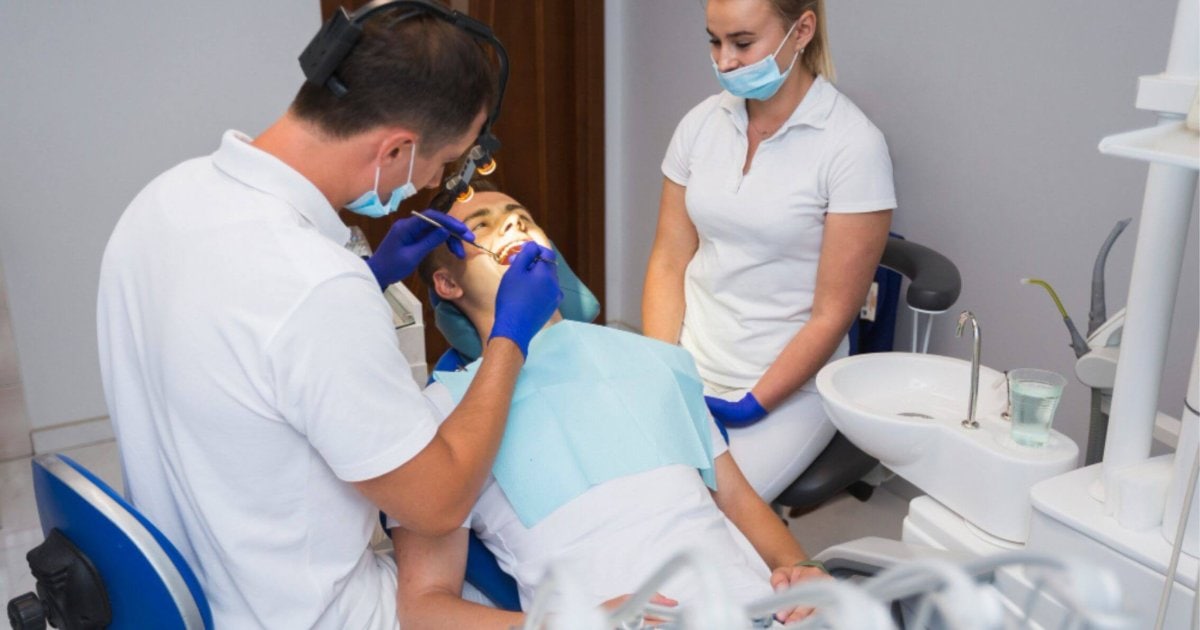
At the practice, our dentist will examine the teeth and gums to find out what’s causing the sensitivity. This includes checking for decay, cracks, gum recession, signs of enamel erosion, and evidence of bruxism.
Fluoride application
Where generalised dentine hypersensitivity is identified, professional fluoride application strengthens enamel and occludes exposed dentinal tubules more effectively than home products alone. This is often a straightforward first step for mild-to-moderate sensitivity.
Fillings and restorations
When decay or a cracked tooth is identified as the cause, restoring the tooth directly addresses the structural problem. A filling, crown, or other restoration removes the pathway to the nerve and eliminates the sensitivity at its source.
Gum disease treatment
If gum recession is driven by periodontal disease, treating the underlying infection — through scaling and root planing — stabilises the condition and prevents further recession. In some cases, a gum graft may be recommended to cover exposed root surfaces.
Nightguard
For patients with bruxism, a custom-fitted nightguard protects the teeth from further enamel wear during sleep. It doesn’t stop grinding but prevents the teeth from taking the force of it.
Desensitising agents
For root surfaces exposed by recession, your dentist can apply bonding agents or desensitising varnishes that seal the tubules more thoroughly than toothpaste. These provide longer-lasting relief than home products for exposed root sensitivity.
Frequently Asked Questions
Is tooth sensitivity permanent?
It depends on the cause. If sensitivity is caused by worn enamel or receding gums, treatment can help reduce the symptoms and prevent further damage, but the lost tissue won’t grow back on its own. Sensitivity from decay, a crack, or a recent dental procedure can be resolved by treating the underlying cause.
Can whitening make teeth more sensitive?
Yes. Whitening temporarily increases sensitivity by opening the pores in the enamel during bleaching. This usually settles within a few days after treatment. Patients with existing sensitivity should discuss this with their dentist before starting whitening — desensitising toothpaste used in the weeks prior can reduce the impact.
Why are my teeth sensitive only in the morning?
Morning sensitivity that eases through the day is a common pattern in bruxism. The teeth have been under sustained pressure overnight, and the nerve is irritated as a result. It’s worth mentioning to your Belmont WA dentist — a nightguard is usually the appropriate solution.
Does sensitive toothpaste actually work?
Yes, with consistent use over several weeks. The active ingredients need time to build up their effect — using desensitising toothpaste once or twice won’t produce noticeable results. Applying it directly to sensitive areas after brushing, rather than rinsing it off, extends contact time and improves effectiveness.
Can children have sensitive teeth?
Yes. Children’s enamel is thinner than adult enamel, making their teeth more sensitive to acidic foods and drinks. Newly erupted permanent teeth can also be temporarily sensitive while the enamel matures. If a child reports consistent sensitivity, a dental check is worth arranging.
Sensitive Teeth Treatment in Belmont WA
If sensitivity is affecting how you eat, drink, or go about your day, it’s worth finding out what’s behind it.
Call us on (08) 9478 2349 or book online.
You’ll find us at 5/132 Epsom Avenue, Belmont WA. We see patients from Belmont and the surrounding areas, including Rivervale, Cloverdale, Redcliffe, and Ascot.