

Tooth Abscess Types, Warning Signs and When It’s an Emergency
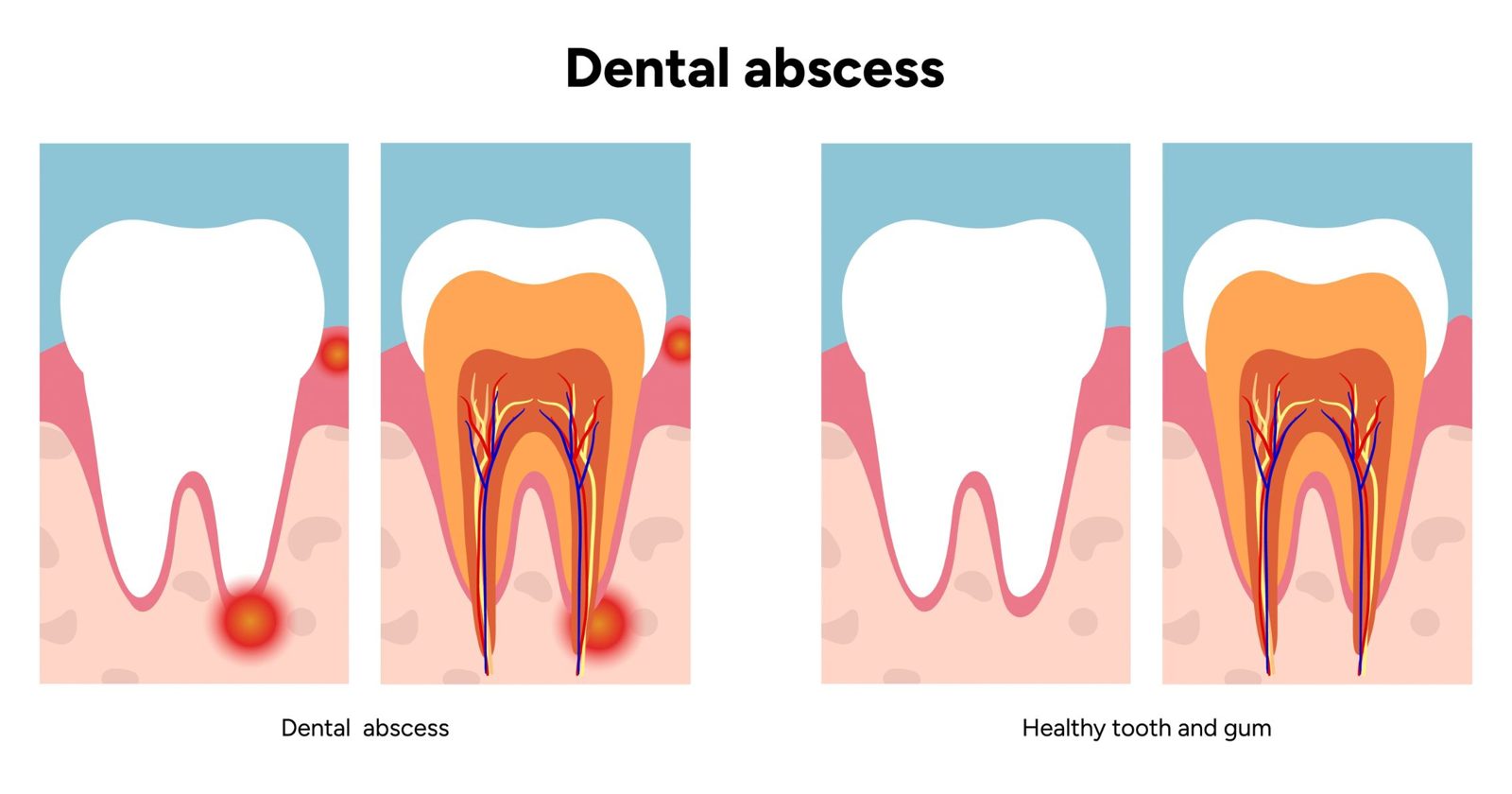
Not every dental problem looks dramatic, and a tooth abscess is a good example — it can start as something small and easy to miss, or show up suddenly as noticeable swelling. Either way, it's an infection, and it needs to be seen rather than watched. This guide walks through what to look for, what it can feel like, and what happens once you're seen.
Spotting a Tooth Abscess
The most familiar sign is a small, red, swollen area on the gum — often described as looking like a pimple, sometimes with a visible head or a small amount of fluid. But that's only one way an abscess shows itself.
Just as often, there's nothing visible at all, and the first real sign is a tooth that's become tender to bite on, or a cheek that looks slightly puffier than usual on one side. Because the visible signs and the actual severity don't always match up, it's not something to judge by eye alone — an examination and usually an X-ray are what actually confirm what's going on underneath.
What It Can Feel Like
No two patients describe a tooth abscess quite the same way, but a few patterns come up often:
- A constant, throbbing ache rather than a sharp, momentary pain
- Pain that seems to spread — into the jaw, up toward the ear, or along the side of the neck
- A tooth that reacts badly to hot or cold, and doesn't settle quickly afterwards
- Discomfort when biting down, even on soft food
- A strange taste, sometimes linked to fluid draining from the gum
- Tender lumps under the jaw or in the neck — these are lymph nodes responding to the infection
- Feeling run-down or feverish, on top of the dental symptoms
It's worth noting that pain levels can be an unreliable guide on their own. Some patients find the discomfort eases once an abscess has drained, even though the underlying infection hasn't actually gone anywhere.
Where the Infection Sits
Dentists generally describe a tooth abscess by its location, since this affects both how it presents and how it's treated:
- A periapical abscess sits at the root tip, usually following decay or a crack that's let bacteria travel down into the pulp.
- A periodontal abscess develops beside the tooth, in the gum and bone that support it.
- A gingival abscess stays confined to the gum tissue itself, without involving the tooth's root or deeper structures.
This distinction matters mainly for your dentist's assessment — from a patient's point of view, any of the three warrants the same response: get it looked at.
When Swelling Becomes an Emergency
A swollen cheek on its own is a reason to book in promptly. But a smaller set of symptoms points to something that can't wait for a regular appointment:
- Swelling that's visibly growing, especially if it's moving toward the eye or down the neck
- Any trouble breathing or swallowing
- A fever that develops alongside the swelling
- A sense that things are getting worse quickly, not better
Any of these on their own is enough reason to seek emergency care immediately, or call 000 if things are escalating fast.
What Treatment Generally Involves
There's no single fix for a tooth abscess — what's needed depends on where the infection is and how advanced it's become by the time you're seen. A dentist will typically do one or more of the following:
Drain the abscess to relieve the build-up of pus and reduce pressure, often the first and most immediate step. From there, if the tooth itself can realistically be saved, root canal treatment clears the infected tissue from inside the tooth and seals it, though no dentist can promise in advance that every tooth will respond the same way, and the outcome depends on your specific case.
If the damage is too extensive, extraction may end up being the more realistic option, something that's only decided after a proper look at the tooth, not assumed from the outset.
Easing Things Until You're Seen
A tooth abscess doesn't go away by itself, no matter how it's managed at home. That said, while you're waiting for an appointment, there are a few things that may make the wait more comfortable:
A saltwater rinse, a cold compress against the outside of the cheek, and over-the-counter pain relief taken as directed on the label can all help in the short term. None of these treats the infection — they're just there to take the edge off until a dentist can actually deal with the cause.
If You're Dealing With a Broader Dental Emergency
A tooth abscess is one of several situations that count as a genuine dental emergency. Our guide to dental emergencies in Belmont runs through the fuller picture, including other situations where waiting isn't the safest option.
Questions Patients Often Ask
Could this just go away by itself?
It's unlikely, and waiting to find out isn't a good strategy. Even if the pain eases, usually because the abscess has drained, the infection itself is still there and still needs treatment.
Is a gum abscess the same thing as a tooth abscess?
Not quite. A gingival abscess is confined to the gum tissue, while a periapical or periodontal abscess involves the tooth or its supporting structures more directly. All three fall under the general term "tooth abscess" and all need a dentist to assess them.
How can I tell if this needs urgent care versus a regular appointment?
Pain and general swelling warrant a prompt appointment. Rapidly spreading swelling, fever, or any difficulty breathing or swallowing are signs that go beyond that and need emergency attention.
Is it normal for the pain to come and go?
It can happen, particularly if an abscess has partly drained. This isn't a sign the infection has resolved, and it's still worth being seen.
What if the tooth can't be saved?
That depends entirely on the individual tooth. Your dentist will only know once they've had a proper look, and extraction is generally considered a last resort rather than a default option.
Could this happen again after treatment?
It's possible, particularly if whatever caused it the first time — decay, a crack, or gum issues — isn't fully addressed. Keeping up with regular check-ups is the best way to catch anything early.
Book an Emergency Appointment in Belmont WA
If something feels off with a tooth or your gums, it's worth getting it checked rather than waiting to see how it develops.
At Epsom Dental Care, we see patients from Belmont, Redcliffe, Ascot, Kewdale, and Rivervale.
Call us on (08) 9478 2349 or book online. You'll find us at 5/132 Epsom Ave, Belmont WA 6104.
Any surgical or invasive procedure carries risks. Before proceeding, consider seeking a second opinion from an appropriately qualified health practitioner.