
Dental Veneers: Types, Procedure and What to Expect

Veneers are one option among several for addressing chips, discolouration, minor spacing, and worn edges — not a one-size-fits-all fix, and not right for every tooth or every patient. This guide covers what veneers actually are, the two main materials used, what the treatment process involves, what affects cost, and how to care for them once they’re placed.
If you’re weighing up whether to enhance your smile with dental veneers, a consultation is where that’s properly assessed — this page is a starting point, not a substitute for that.
What Veneers Are and What They Do
A veneer is a thin shell that is bonded to the front surface of a tooth. Rather than replacing the whole visible surface the way a crown does, it covers the front only, which means less of the natural tooth structure needs to be altered to fit it.
Porcelain veneers are custom-fabricated in a dental laboratory from an impression or digital scan of the prepared tooth, then bonded into place. They’re built up in layers to match colour and translucency to the surrounding teeth.
Composite veneers are built up directly on the tooth in a single visit, using a tooth-coloured resin material that’s sculpted and set in place, rather than fabricated separately and fitted later.
The two aren’t simply a “better vs. cheaper” choice — they differ in how they’re made, how they wear, how they can be adjusted or repaired, and how much tooth preparation each involves. Which is more appropriate depends on the specific tooth, the extent of the change being made, and what you’re aiming to address — this is assessed individually rather than being the same recommendation for everyone.
Who Veneers Suit
Veneers may be considered for:
- Chips or minor cracks in the visible front surface of a tooth
- Discolouration that hasn’t responded to whitening — internal staining or discolouration from certain medications, for example, where whitening treatments have limited effect
- Minor spacing between front teeth, as an alternative to orthodontic treatment for small gaps
- Worn or uneven edges, where the biting edge of a tooth has changed shape over time
Veneers aren’t well suited to significant misalignment, teeth needing structural rebuilding rather than a surface change, or situations where there isn’t enough healthy enamel remaining to bond to. Whether a tooth is a suitable candidate is determined by an exam — this isn’t something to assess from a mirror at home, and a consultation is the way to find out whether veneers are the right fit for what you’re looking to address, or whether a different treatment suits your teeth better.
The Treatment Process
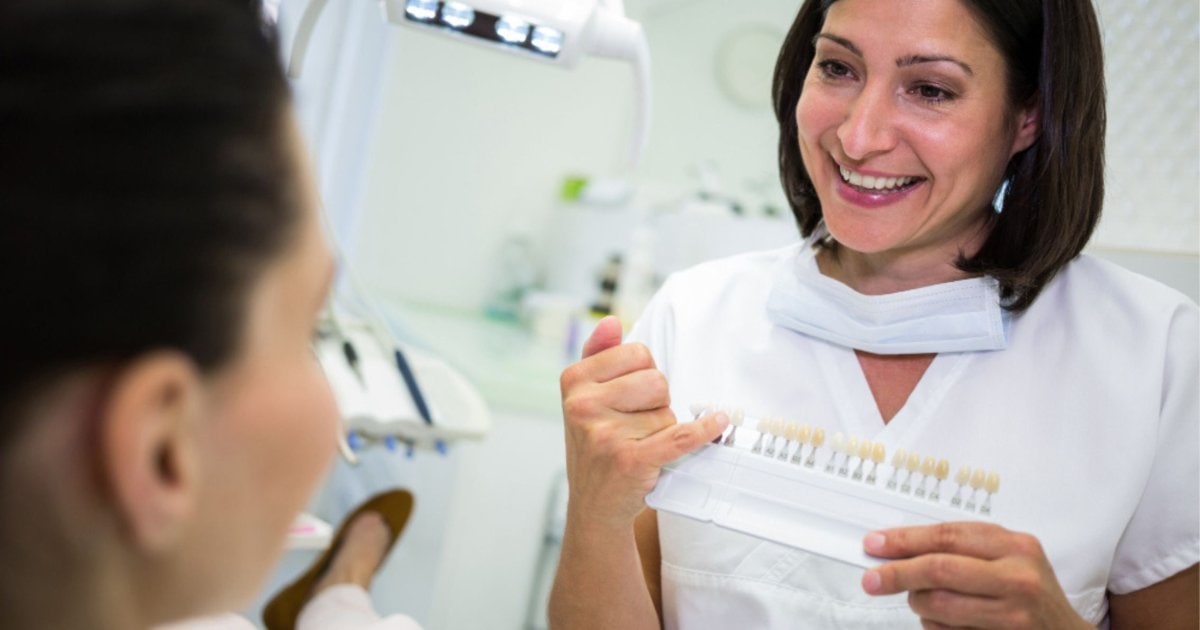
Consultation and planning. Your dentist examines the teeth involved, discusses what you’re aiming to change, and talks through whether veneers are suitable or whether an alternative treatment would achieve it more directly. This is also where shade, shape, and the number of teeth involved are planned out.
Preparation. For porcelain veneers, a thin layer of enamel is removed from the front of the tooth to make room for the veneer and help it bond and sit flush with the surrounding teeth. This step is irreversible — once enamel is removed, the tooth will need a veneer or another restoration going forward. Composite veneers involve less, or in some cases no, enamel removal, since the material is built up on the surface directly.
Temporaries. For porcelain veneers, a temporary veneer is placed while the permanent one is fabricated in a laboratory, protecting the prepared tooth in the meantime. Composite veneers, being completed in a single visit, don’t require this step.
Fitting. The finished porcelain veneer is checked for fit, shade, and shape before being bonded permanently into place. For composite veneers, the material is shaped and polished directly during the same appointment.
What Affects the Cost
Veneer cost varies depending on several factors, discussed individually at your consultation:
- Material — porcelain and composite differ in cost due to the laboratory work and materials involved.
- Number of teeth — cost scales with how many teeth are being treated, since each veneer is individually planned and fabricated or applied.
- Laboratory work — porcelain veneers involve a dental laboratory fabricating each veneer to a custom specification, which is a separate cost component to the clinical appointment itself.
Because these factors vary from case to case, an accurate cost figure is something your dentist can provide once your specific treatment plan is set out at a consultation, rather than a fixed number that applies across the board.
Looking After Veneers
Hygiene. Veneers are cared for the same way natural teeth are — regular brushing and flossing, including around the edges of the veneer where it meets the gum line, and routine dental check-ups so your dentist can monitor the veneer and surrounding tooth over time.
Protecting against grinding. Grinding or clenching can place extra force on veneers, particularly porcelain, which can increase the risk of chipping or the veneer coming loose over time. If grinding is a factor for you, your dentist may discuss options to help protect the veneers as part of your treatment plan.
Realistic lifespan. How long a veneer lasts varies from patient to patient and depends on the material, how well it’s cared for, and individual factors like grinding or diet.
For porcelain veneers specifically, a systematic review and meta-analysis published in the International Journal of Prosthodontics (Layton, Clarke & Walton, 2012) found a survival rate of around 95% at 10 years for feldspathic porcelain veneers bonded to enamel, under favourable case selection and bonding conditions — individual results vary, and this isn’t a guarantee of a specific outcome for any particular patient. Composite veneers have a shorter expected lifespan than porcelain and are more prone to staining and minor chipping over time, though they can be repaired or touched up more easily than porcelain if this occurs.
Veneers aren’t permanent restorations — at some point, replacement is likely to be needed, and your Belmont WA dentist can explain what to expect in your specific situation.
Frequently Asked Questions
What distinguishes composite veneers from porcelain veneers?
Porcelain veneers are custom-made in a laboratory and bonded into place over two visits, involving more tooth preparation but with a longer expected lifespan based on research findings. Composite veneers are built up directly on the tooth in a single visit, involve less preparation, can be repaired more easily, and have a shorter lifespan than porcelain.
How long do dental veneers last?
This depends on the material and individual factors such as oral hygiene, diet, and grinding. Porcelain veneers have been shown in research to have a survival rate of around 95% at 10 years under favourable conditions, though this varies between patients. Composite veneers have a shorter expected lifespan but can be repaired.
Is removing enamel for veneers reversible?
For porcelain veneers, a thin layer of enamel is removed to prepare the tooth, and this step is irreversible — once it’s done, that tooth will need a veneer or another restoration in place going forward. Composite veneers involve less, or in some cases no, enamel removal. This is a limitation worth understanding before proceeding, and your dentist will explain what’s involved for your specific case at a consultation.
What happens if a veneer chips or comes loose?
This is assessed by your dentist rather than something to manage at home. Composite veneers can be repaired directly in a follow-up appointment. Porcelain veneers may need to be replaced rather than repaired, depending on the scope of the damage — your dentist can advise what’s involved once the veneer has been examined.
How do I know if I’m a candidate for veneers?
This is determined by an exam of the specific teeth involved, including how much healthy enamel is present and what you’re aiming to address. A consultation is the way to find out whether veneers are suitable for you or whether another treatment would be more appropriate.
Dental Veneers in Belmont WA
If you’re considering how to enhance your smile with dental veneers, the next step is a consultation to find out whether they’re the right fit for your teeth.
At Epsom Dental Care, we see patients from Belmont and the surrounding areas of Rivervale, Cloverdale, Redcliffe, and Ascot.
Call us on (08) 9478 2349 or book online. Visit us at 5/132 Epsom Ave, Belmont WA.
Any surgical or invasive procedure carries risks. Before proceeding, consider seeking a second opinion from an appropriately qualified health practitioner.