

Wisdom Teeth Removal: What to Expect on the Day and How to Recover
Wisdom teeth removal is one of the more common dental procedures, but that doesn’t make it any less daunting if you haven’t been through it before. This guide walks through why wisdom teeth are often removed, what actually happens on the day, and what recovery tends to look like, including the risks that come with any surgical or invasive procedure. It’s general information rather than a substitute for an assessment, since every case is different depending on how the teeth are positioned.
Why Wisdom Teeth Are Removed
Wisdom teeth are the last teeth to come through, usually in the late teens or early twenties, and by that point there often isn’t enough room in the jaw for them to erupt properly. Common reasons for removal include:
- The tooth is impacted, meaning it’s stuck against another tooth, bone, or gum tissue and can’t fully emerge.
- It’s growing at an angle rather than straight up, which can push against the neighbouring tooth.
- Partial eruption has left a flap of gum tissue over part of the tooth, which can trap food and become infected.
- There’s a risk of crowding or damage to nearby teeth as the wisdom tooth continues trying to move into a space that isn’t there.
Not every wisdom tooth needs to come out. Some erupt fully and cause no issues at all. An assessment, usually including an X-ray, is the way to work out whether a specific tooth is likely to cause problems.
Impacted Wisdom Tooth: What It Means
An impacted wisdom tooth is one that hasn’t been able to erupt into its normal position, usually because there isn’t enough space, or because it’s angled against another tooth or the jawbone. Impaction can be partial, where part of the tooth has broken through the gum, or full, where the tooth remains completely below the gumline.
The type and angle of impaction affect both the complexity of removal and the recovery afterwards, which is part of why an X-ray is used to plan the approach rather than relying on a visual check alone.
Assessment Before Removal
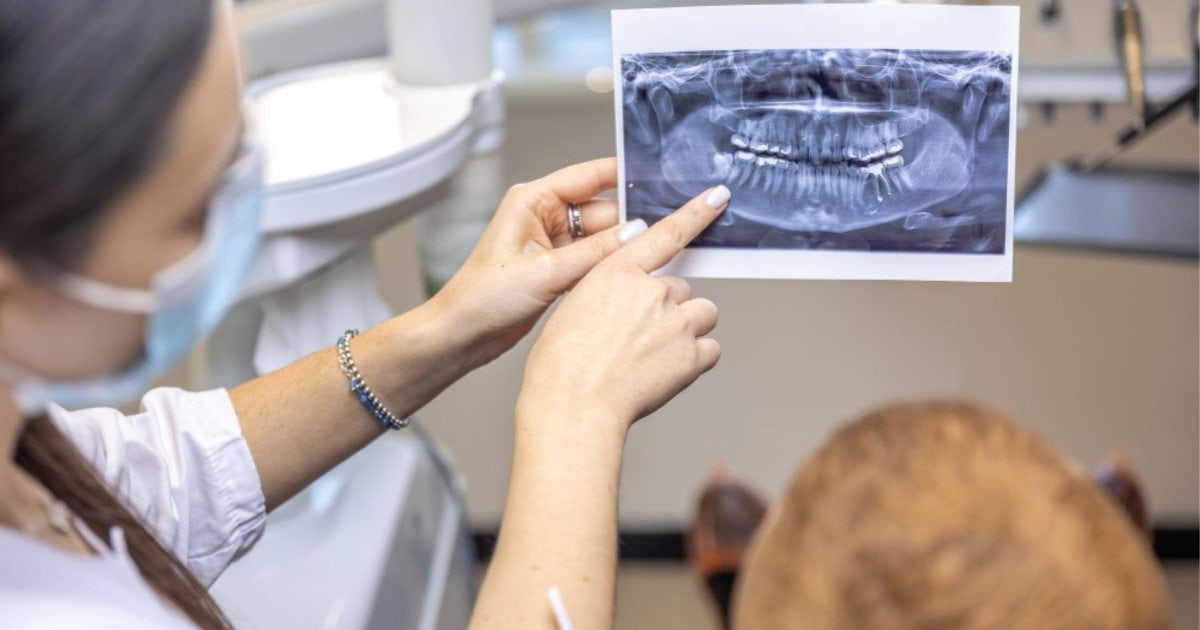
Before any wisdom tooth is removed, a dentist will usually review your dental history, examine the area, and take an X-ray, often a panoramic image (OPG), to see the position of the tooth, its roots, and its relationship to nearby structures like the nerve that runs through the lower jaw. This is also the point where anaesthetic and sedation options are discussed, since more complex or fully impacted cases sometimes need a different approach than a standard extraction.
If a case looks more involved, referral to an oral and maxillofacial surgeon for the procedure is a normal and common part of wisdom teeth care, not a sign that anything has gone wrong.
What Happens on the Day
The procedure itself varies depending on how the tooth is positioned. A tooth that has fully erupted may be removed in a way similar to any other extraction, under local anaesthetic. An impacted tooth or one that has not erupted through the gum may require surgical removal. This can involve opening the gum and, in some cases, dividing the tooth into sections before removal.
Local anaesthetic is used to manage discomfort during the procedure; individual experiences of comfort during and after treatment vary, and no technique or provider can promise a pain-free outcome. You may also feel pressure or movement during the procedure, even where pain itself is well controlled.
Procedure length depends on the number of teeth being removed and how complex each one is, so it isn’t the same for every patient.
Wisdom Teeth Removal Cost
Cost depends on several factors: how many teeth are being removed, whether the extraction is standard or surgical, whether sedation beyond local anaesthetic is needed, and whether the case is referred to an oral surgeon. Because of this range, an itemised quote following an assessment is the reliable way to know what a specific case will cost, rather than a general figure that may not reflect your situation.
It’s also worth checking with your health fund in advance, since coverage varies by policy and provider.
Immediate Aftercare in the First 24 Hours
The first day after wisdom teeth removal is mainly about protecting the extraction site and letting the initial clot form:
- Bite gently on the gauze provided for the recommended time to help control bleeding.
- Rest for the remainder of the day and avoid strenuous activity.
- Use an ice pack against the outside of the cheek, not directly on the skin, in short intervals to help manage swelling.
- Avoid rinsing, spitting forcefully, or using a straw, since this can dislodge the clot that’s forming in the socket.
- Avoid smoking, since this significantly increases the risk of complications at the extraction site.
Wisdom Teeth Swelling
Some swelling around the jaw and cheek is a normal part of healing after wisdom teeth removal, particularly for surgical extractions. It typically increases over the first couple of days before gradually easing over the following days. Ice packs in the first 24 hours, and switching to warmth after that, are commonly recommended to help manage it.
Swelling that keeps increasing well beyond the first few days, or that’s accompanied by fever, spreading redness, or difficulty swallowing or breathing, is different from ordinary post-surgical swelling and needs prompt attention rather than waiting it out.
Eating After Wisdom Teeth Removal
What you eat in the days after wisdom teeth removal matters for how the extraction site heals:
- Choose softer, cooler foods for the first day or two, such as yoghurt, mashed potato, or soup once it has cooled.
- Avoid hot food and drinks initially, since heat can disturb the clot forming in the socket.
- Avoid using a straw for at least several days, since the suction can dislodge the clot and contribute to dry socket.
- Steer clear of crunchy, hard, or small foods like nuts, chips, or seeds, which can get lodged in the extraction site.
- Gradually reintroduce normal foods as chewing becomes more comfortable, rather than on a fixed schedule, since healing speed varies between patients.

Dry Socket
Dry socket is one of the more well-known risks of wisdom teeth removal and happens when the blood clot at the extraction site is dislodged or breaks down before the area has properly healed, exposing the bone and nerve endings underneath.
It typically develops a few days after the procedure, rather than immediately. It tends to cause a noticeably increased, throbbing pain, sometimes with a bad taste or odour, rather than the gradually improving discomfort that’s expected as healing progresses normally. Straws, smoking, and vigorous rinsing in the first few days all increase the risk.
If pain is getting worse rather than better a few days after the procedure, this is worth contacting your dentist about rather than waiting to see if it resolves.
Other Risks to Be Aware Of
As with any surgical or invasive procedure, wisdom teeth removal carries risks beyond dry socket, and outcomes vary between patients:
- Infection at the extraction site, which can occur despite standard precautions and may need antibiotics.
- Bleeding that continues longer than expected, particularly if aftercare instructions around rinsing and physical activity aren’t followed.
- Nerve involvement, particularly with lower wisdom teeth positioned close to the nerve running through the jaw, which can result in temporary or, less commonly, longer-lasting numbness or altered sensation in the lip, chin, or tongue.
- Limited jaw opening (sometimes called trismus) in the days following surgery, which usually improves as swelling and inflammation settle.
None of this is intended to suggest these outcomes are common or expected for every patient, but they’re part of an honest picture of what any surgical extraction carries. They’re worth discussing directly with your dentist before proceeding.
Wisdom Teeth Recovery Timeline
Recovery varies depending on how complex the extraction was and how many teeth were removed, but there’s a general pattern many patients experience:
- Days 1–2: Swelling and discomfort are usually at their most noticeable, alongside some bruising in more complex cases.
- Days 3–5: Swelling generally starts to ease, though this is also the window in which dry socket, if it’s going to occur, tends to become noticeable.
- First week: Most patients are back to a fairly normal diet and daily routine, though full healing of the extraction site continues well beyond this.
- Beyond a week: Any stitches, if used, may need to be checked or, depending on the type used, may dissolve on their own.
Recovery times vary between patients, so these timeframes should be viewed as a general guide. Your dentist can explain what to expect based on your procedure.
When to Contact Your Dentist After Wisdom Teeth Removal
A few signs are worth calling about rather than monitoring at home: pain that’s increasing rather than easing a few days after the procedure, fever, pus or an unpleasant taste from the extraction site, bleeding that isn’t settling with gentle pressure, or numbness in the lip, chin, or tongue that persists longer than expected. Any of these is a reasonable reason to get in touch rather than wait for your next scheduled check.
FAQ
Does wisdom teeth removal hurt?
Local anaesthetic is used to manage discomfort during the procedure itself, though individual experiences vary and some pressure or movement may still be felt. Afterwards, some discomfort during healing is expected and is generally managed with pain relief as advised by your dentist.
How long does it take to recover after wisdom teeth removal?
This varies depending on the complexity of the extraction and the individual. Many patients are back to normal daily activities within a week, though full healing of the extraction site takes longer.
What is a dry socket and how do I know if I have it?
Dry socket occurs when the blood clot at the extraction site is lost before healing is complete. It typically causes noticeably worsening pain a few days after the procedure, sometimes with a bad taste or odour. It’s worth contacting your dentist if you’re concerned rather than waiting to see if it resolves.
Can I go back to work or school the next day?
This depends on the complexity of your procedure and how you’re feeling. Many patients take at least a day off, and more for surgical or multiple extractions. Your dentist can advise based on your specific case.
Why do I need an X-ray before wisdom teeth removal?
An X-ray, often a panoramic image, shows the position of the wisdom tooth roots and their relationship to nearby structures, including the nerve running through the lower jaw. This helps plan the safest approach for removal.
Will I need to see a specialist for my wisdom teeth?
Some cases are managed as a standard extraction, while more complex or fully impacted teeth are sometimes referred to an oral and maxillofacial surgeon. This is a normal part of wisdom teeth care and depends on the specifics of your case.
Book a Wisdom Teeth Assessment in Belmont WA
If you’re experiencing pain, swelling, or have been told your wisdom teeth may need attention, an assessment is the way to find out what’s actually needed for your situation.
At Epsom Dental Care, we see patients from Belmont, Redcliffe, Ascot, Kewdale, and Rivervale.
Call us on (08) 9478 2349 or book online. You’ll find us at 5/132 Epsom Avenue, Belmont WA.
Any surgical or invasive procedure carries risks. Before proceeding, consider seeking a second opinion from an appropriately qualified health practitioner.